
C4DM Seminar: Keeping Score: Computational Methods for the Analysis of Encoded ("Symbolic") Musical Scores
QMUL, School of Electronic Engineering and Computer Science
Centre for Digital Music Seminar Series
Seminar by: Mark Gotham
Date/time: Wednesday, 3rd June 2026, 11:30 am
Location: G2, Engineering Building, Mile End Campus, Queen Mary University of London
Title: Adaptation and generalization to head-related transfer functions
Abstract: This talk presents work in progress from a large project combining the book Keeping Score with an associated software library, AMADS.
The project focuses on computational methods for the analysis of encoded, or “symbolic”, musical scores. For the C4DM audience, the talk will highlight new algorithms and ideas from the project’s “Step Further” sections, including musically informed approaches to reconstructing fractional values from floating-point errors, a definition of syncopation based on limited opportunities for resolution, computationally robust yet culturally flexible methods for encoding metre, contour reduction of melodic and bass lines, applications of “keyscape” visualisation to other musical parameters, and new categories for harmonic progression analysis.
Many of these methods are already available through the public book, the AMADS code repository, and accompanying notebooks, which provide accessible introductions to the techniques.
Links
Book: https://doi.org/10.5281/zenodo.14938027
Code library: https://github.com/music-computing/amads
Python package: pip install amads
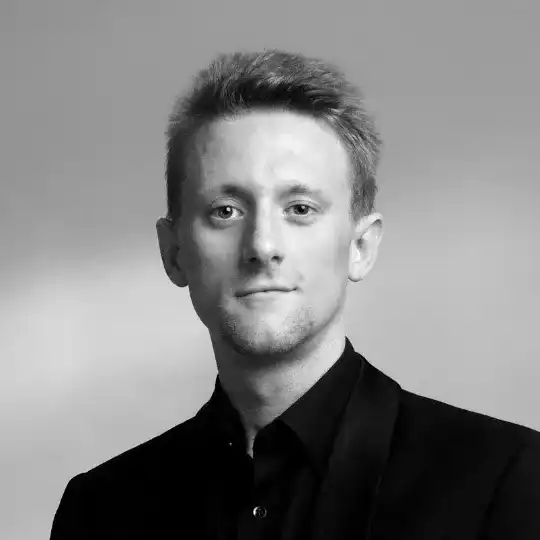
Bio: Mark Gotham specialises in computational methods for music theory, analysis, and composition. He holds the rare distinction of having being appointed to permanent faculty positions in the humanities (Professor of Music Theory at T. U. Dortmund), in STEM (in Computer Science at Durham) and ‘in between’ (now as Senior Lecturer in Cultural Computation in the Digital Humanities Department at KCL).
Beyond research, Mark’s work spans commercial contracts, musical composition, and more. Commercial contracts have included the “Beethoven X” project for Deutsche Telekom. Composition highlights include broadcasts on BBC Radio 3 and national Chinese television and the debut CD of Mark’s compositions attracting 5-star critical reviews. Earlier in his career, Mark was a highly active as a performer (singer, multi-instrumentalist, and conductor). Highlights included conducting contemporary music projects with principal players of the Philharmonia Orchestra and LSO.
Mark holds a PhD from Cambridge, MMus from the RNCM, and a BA from Oxford (where he graduated at the top of his cohort).